Kyle Clements (00:00):
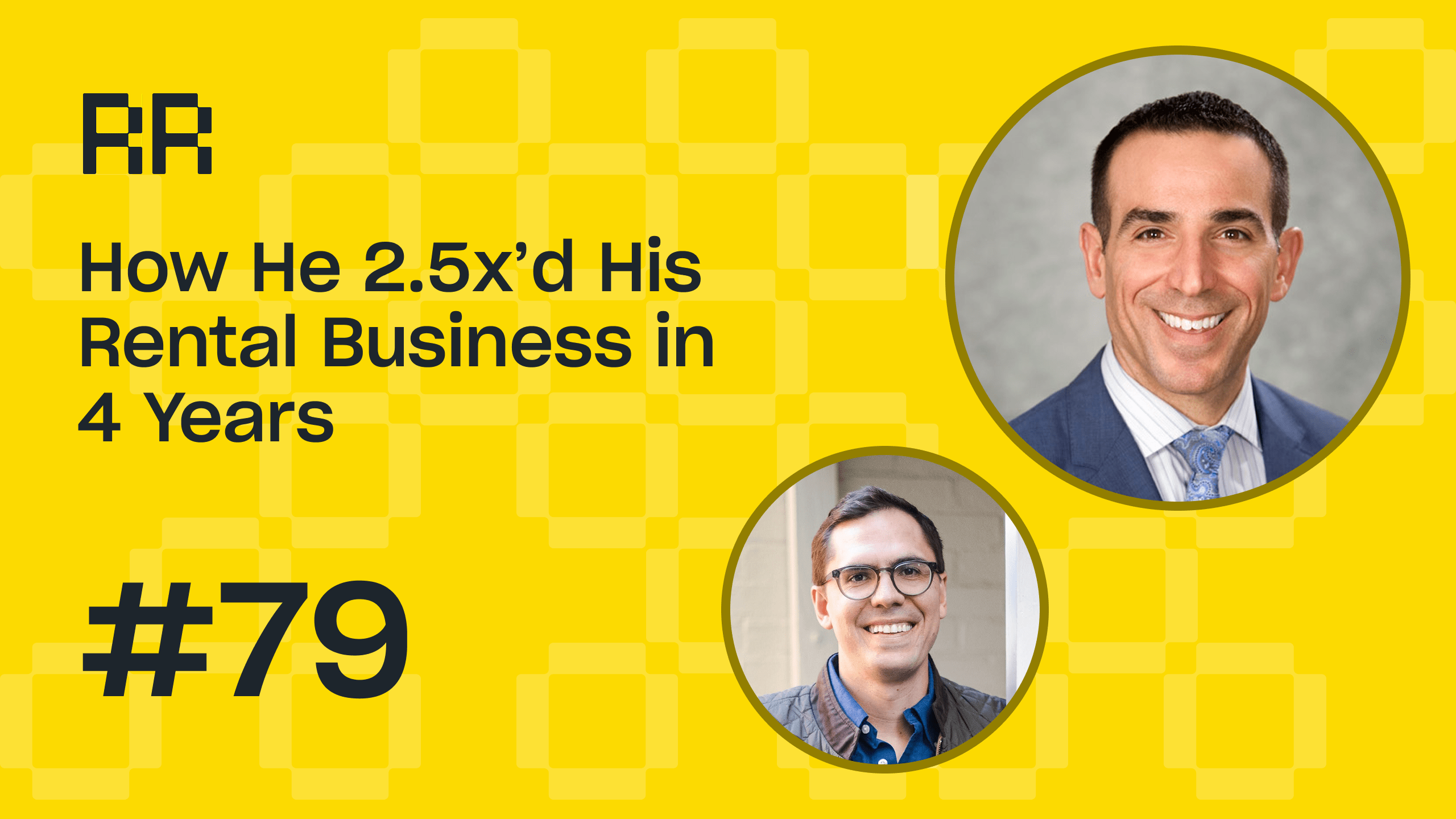
Hey folks, for episode 79 of The Rental Roundtable we had on my friend Dino Caparco. He’s the president of Taylor Rental in Rhode Island, our first Rhode Island guest. Really awesome episode. Different story. He didn’t start in rental. We actually started in the rental industry about the same time, about four or five years ago. Met him at the first show in Las Vegas in 2021 and he bought a rental company that was kind of doing okay and really turned around in four years, two and a half times revenue, two and a half times profitability, no shortcuts. Totally changed the team that one person who came over from the previous team painted the building, bought new equipment, put a new parking lot in, really changed the perception of the company through hard work. And if there’s shortcuts in the rental industry, I haven’t found ’em neither Dino, but he put the hard work in to get there and really great story of someone who bought a rental company and has really taken it to the next level.
Kyle Clements (00:50):
So if you’re interested in that story, I think you’ll like hearing from Dino. Great guy. Alright, everyone, welcome to the Rental Roundtable, episode number 79. We have on my friend Dino Caparco, president of Taylor Rental in Rhode Island. Dino, welcome to the show.
Dino Caparco (01:03):
Thank you. Thanks for having me.
Kyle Clements (01:06):
I think the first Rhode Island guest as far as I could tell. So we’re starting to hit all 50 states I think first Rhode Island. Are you from Rhode Island? Where’d you grow up?
Dino Caparco (01:13):
I am born and raised in Rhode Island. Rhode.
Kyle Clements (01:16):
Alright. Have you lived anywhere else or is that your whole life?
Dino Caparco (01:19):
There? When I was younger, I lived in Southern California for a couple years, but a lot of people always end up coming back to Rhode Island.
Kyle Clements (01:30):
Yeah, there you go. Well, I was reading, you’re a bio, you’re an avid runner, over a dozen marathons, ultra marathons up to 50 miles. I’ve done a dozen, I’ve done half a dozen marathons. What’s been your favorite race you’ve done?
Dino Caparco (01:44):
Definitely, I’d like to say Boston. I’ve done Boston five times. Boston is really a really fun race. Kind of a double-edged sword because of the time of the year training all went along when it’s warm, a lot of times you get a warm day and it can be brutal, but the fans in the crowd and Boston’s incredible. One of my favorite things about Boston is actually going up there in the weeks leading up to the marathon and doing some training runs either on the front half or the back half of it and it’s just like, it’s almost like it’s race day. There’s so many people out there, but it’s pretty amazing, pretty amazing route and fans. So I love that race.
Kyle Clements (02:23):
That’s the goat. I did my first, I was telling you my first major marathon five days ago and did New York and we were talking about having your name on your front. So my name is Kyle. I didn’t have my name but I was running next to a guy named Carl and it sounded like I was Kyle. People were like, let’s go Carl. And in my mind I feel like they were cheering for me. So I think next race I’ll have my name on my shirt.
Dino Caparco (02:46):
Definitely, it helps you get through
Kyle Clements (02:48):
And shout out to Anthony Durante if you’re listening. I appreciate you. Mile 13 with the Go Kyle sign. So needed the boost. So we’ve had a lot of runners on the show. Our last guest a couple of guests ago, Dr. Vince Elli, he’s done 15 or 16 Ironman triathlons. I dunno, I think if you’re a business leader you sort of get put in that bucket a little bit. The endurance crazy athlete. So different brain, different way of thinking.
(03:17):
Anyways, we can talk about a whole running episode. We won’t do that for our audience today, but I want to talk about your story. You’re new to rental. I’ve been in rental five years, you’ve been around that same time. Most of the guests that come on have rental in their blood as a theme. They’ve grew up in rental, grandfather, father, et cetera. That’s not my story. It doesn’t sound like your story. So you’re now running a location in Rhode Island and I want to hear how you got here. Tell me about your background. You have an engineering background, MBA, you’ve done a lot of other stuff outside of rental. Tell me how you got here today.
Dino Caparco (03:50):
Yeah, so before buying the business I was an engineering manager at a robotics and custom automation company where I worked for over 24 years and I’ve always kind of been entrepreneurial. I’ve had some small businesses invested in real estate in the engineering capacity that I was in. I was basically running two departments within a company and it was very autonomous. So it was essentially that I was running my own business with full P&L responsibility. So like you said, I had my mechanical engineering degree and then I went back and got a master’s in business and I’ve always had the itch to do something and I was just to the point where I kind of really outgrew the company that I was at. There was no room for me to keep on moving up and I knew that my next step had to do something for myself.
Dino Caparco (04:48):
What it was, I wasn’t a hundred percent sure I was looking for some type of business that had some type of revenue stream but also had an opportunity to improve or grow the business. That’s when I found Taylor Rental. Never had any exposure to the rental industry. I’ve maybe rented a couple of tools or a trailer back in the day and started through the process of that, made an offer. Offer was accepted and once I was on the contract it took quite a while to go through between all the different approvals and inspections and everything you have to do. That’s when I really started digging in and learning about the rental industry. I think I joined the a RA and I toured, I visited a bunch of other folks and other rental companies, anybody who had let me come in and talk to them and learn about it.
Dino Caparco (05:50):
I was really excited to do so. I traveled around, met a bunch of people, went to a bunch of different businesses and it was reasonable to me to look at it from the outside and I kind of understand basically what it was all about. But it wasn’t until the day that we closed that actually I stepped foot in my store when it was closed a couple times to do some inspections and to do some things of that nature. But it wasn’t until the day we closed that actually stepped behind the counter as the business owner and as an employee in the rental industry and it was just a completely different world.
Kyle Clements (06:30):
It is probably getting the star line of a marathon or maybe your first marathon. You’re just like, what am I doing? At that point you’re like pot committed, you’re in. Exactly. You’re not going to bail. So I’m curious though, you’re 24 years engineer, engineering manager, you get an MBA in robotics. Good setup, I’m sure. And you just had this itch to be an entrepreneur, right? It sounds like that was just sort of what particular did you want to be your own boss? Did you want the financial freedom? What about that? Because it’s hard. It’s always hard to take a leap. It’s probably even harder after you’ve had a career for 24 years, what was driving you to want to be an entrepreneur?
Dino Caparco (07:06):
I think that the biggest thing for me was to be able to to run the business and also benefit from it. I wanted to have more to benefit from the decisions that I made. I had a pretty good track record at the previous company that I was at and I figured, hey, I’ve been doing well in making these folks a lot of money. It’s time to do something that’s going to benefit me and benefit my family. So I think that was one of the biggest drivers. I knew it was going to be a lot of work, so I knew initially it may be a little less freedom, but long, long-term hoping for a little more freedom.
Kyle Clements (07:51):
So you wanted to be the captain of your own ship. If we’re going to succeed, I want to participate in that and own your own decisions. And were you looking at other businesses outside of other industries, too?
Dino Caparco (08:03):
Right, industries of course. My first inclination was to look at something closer to the engineering field. We primarily dealt with injection molding facilities, something in that arena or something that I had an expertise in. But I think from the business side, business is business to some extent and there’s a lot of transferable skills between where I was and where I am now and I was just looking for something that made sense for me and that was a good opportunity I think.
Kyle Clements (08:37):
Yeah. And what about the rental business model at that time was attractive to you? Are you looking at it from the outside? There are people who listed this podcast who are a lot of ’em mostly in rental. There are people who want to get into rental and they’re trying to learn when you’re looking at engineering companies and rental, probably a dozen different businesses. What about the rental business was attractive to you?
Dino Caparco (08:57):
Well, the rental business in general at the time it’s a little over four years that we closed. Things were coming back together. There was huge upside. I did some research just on the state of the industry and it looked like there was really going to be a good trajectory of growth in the future. Also, I think in particular with the store that I looked at, I saw that there was really a lot of older equipment that I could tell that it was a seller that really was looking to get out of the business. And I know that there was an upside in that. That was the thing that really attracted me to this specific company.
Kyle Clements (09:41):
It was one that was more of a not value play, but you could see the growth potential with more investment. A lot of people get in, Hey, I want to run my own rental business. Well there’s really two ways you can buy one or start one. Did you consider starting one at all? And if not, what are some of the reasons why you went the purchase route? Some people call it entrepreneurship through acquisition ETA, right? Why did you decide to buy a business versus start one from scratch?
Dino Caparco (10:10):
So in my specific case, I think it was looking at a business that had the revenue stream coming in already. If you’re going to build a business from scratch, it’s obviously huge capital expenditures that you’re going to be looking at. So thinking about the biggest bang from my buck, it just made sense to go that route because if you look at the numbers just to start, even though I knew it was going to have to be a lot of capital expenditures to get the company to where I needed it to be, but at least it was running and they didn’t all have to be at the same time. And I could kind of couple the growth with the expenses and use that revenue to keep on putting it back into the business. So that was my idea. In Rhode Island, we’re obviously limited with land and availability, so that’s another consideration. The land here is very expensive to find something where you’d be able to start a location from scratch.
Kyle Clements (11:10):
Yeah, I mean buying the revenue and the existing customer base is considered a lower risk if you get the right price. What’s been the most surprising thing getting into rental, buying the business? What surprised you the most?
Dino Caparco (11:23):
I think the biggest surprise I think are the customers, A lot of the customers, how some of the customers perceive rental companies. I think that some customers think that you just have this equipment sitting on the floor and that you should kind of just let them borrow it for as long as they want. It’s kind of surprising just how loose initially, especially in my place, the biggest shock to me was how the customers, what they expected and what they were looking for as opposed to what I’m accustomed to in a business or if you go out to a restaurant where you pay for your meal. A lot of folks from my experience were looking to get the meal without really paying for it.
Dino Caparco (12:10):
Was that was a shock for me?
Kyle Clements (12:12):
Yeah. How do you combat that? Is that something you’ve heard? You’ve visited a lot of companies, I know you’re involved with the ARA. Is that a theme you’ve heard from other companies or is that something to your customer base?
Dino Caparco (12:20):
And I think one of the biggest things are the companies that have been around for a long time and have had some customers that they’ve been dealing with for a while. If you start making concessions over the years, then it kind of turns into a situation where that’s what customers expect. And I think for me, the biggest thing when it comes to combating that we had to really implement processes and put processes in place, which to me, I think this was a benefit from me looking from the outside in because to me it was kind of black and white. I was like, well, this is a business and this is how you run a business. This is the process and this is how we’re going to do this. And of course my first six or seven months were customers telling me how they’ll go elsewhere with their business. But during that time we were also growing our business and profitability and by the first year we doubled it. So those customers that went elsewhere weren’t really the customers that we wanted to have as our customer base.
Kyle Clements (13:27):
So the customers who are delinquent payment, paying late, you sort of put some new processes, Hey, we’re going to cut that out. And they threatened you and some of them left, but you’re like, those are the customers you didn’t want anyways. Right?
Dino Caparco (13:37):
Right. Exactly. Exactly. It took about a good year to cull it all out to like, Hey, listen, my ad is like we’re going to provide you with good equipment. In the past, the equipment wasn’t really well-maintained. It was an older fleet. My focus is on providing you with really good equipment, maintaining the fleet, well, turning it over, getting new equipment, not having equipment that’s 10 years old, but in turn I’m going to charge you a good rate for it. I’m not going to be the cheapest person around, but we are going to have some of the best equipment around. And I think that a lot of the customers started to understand and see the value in that. And a lot of the comments or the five star reviews that we get on Google, customers recognize that, hey, this place has great equipment. And I am constantly pointing that out to my employees because I’m always pushing. We really have to, what if this isn’t right? Let’s go one step further, go above and beyond and try to make it even better, exceed what the expectations of the customer are.
Kyle Clements (14:48):
So you bought this business, older equipment, customer base wasn’t the best customer base ever. You started buying better equipment, putting better business practices, raising prices. How has your customer base changed in four years based on all those changes? Is it similar? Is it totally different if you got moved upmarket? How has your customer makeup changed in four years?
Dino Caparco (15:08):
So I think from the customer makeup perspective, we are mostly homeowners, small contractors and landscapers. I think some of the bigger contractors now are looking at us saying, Hey, I didn’t realize you had all this stuff. And I get comments. People will drive by and call and say, Hey, I saw this piece of equipment out there, it looks great out there. I didn’t realize that you had it. So I think that people are more looking at us like, Hey, I know I can get a reliable piece of equipment from them. So I think that we’re starting to do a lot more with, I think more people are looking at us and even we do events as well. We’re about 60 40, 60% of our business is the equipment side. But I’ve had folks come in our store, the inside of the store was pretty dated and you wouldn’t have expected.
Dino Caparco (15:56):
But I’ve had people come in and say, I never would’ve ever rented a tent or even thought of renting one here before, but wow, it’s changed. So I think on that side of it, we’ve made a lot of improvements too, just in the customer’s perception and they see that we take care of the place. I’d say for my first three years, there wasn’t a day that went by that somebody came in and said, this place looks great. Even today a customer came in and said, you’ve really done a good job. This place looks good. So people notice it and it makes a difference to most people.
Kyle Clements (16:32):
Was that the case four years ago? Was it cleaned and spacious the way you have it or was that something else you changed as you bought it?
Dino Caparco (16:37):
No, that’s something else we did. We cleaned it up, painted it. One of the first things I did pave the parking lot, put a new fence. To me that stuff is kind of low hanging fruit and I’m kind of a person that likes to have things in the best manner possible. So I saw that stuff and said, we’ve got to improve this.
Kyle Clements (17:01):
Yeah, I mean some of our guests have heard me talk about the New York subways. I think Malcolm Gladwell talked about was the seventies, eighties, and they had all these crime and everything and they cleaned up the subways, they took off the spray paint, they started enforcing the ticketing and crime plummeted because the perception was this is a tight operation, everything is run down, the fence is broken, the door doesn’t shut, it doesn’t make you feel like you’re at a top tier place. So you painted the building, added new parking spots, all the stuff that was not the sexy NBA stuff, but just making your business seem professional. And it’s hard to say you had an ROI, but were you able to feel that? Were you able to feel like people had a new respect or new view of your business
Dino Caparco (17:46):
After doing all that? I think so. Definitely mean, I’d say within six months or so, within a short period of time, I was able to see that when I was doing it. I was just like, there was no question. I’m like, this has to be done. The vehicles that they had were all old vehicles. I replaced all of the vehicles with newer vehicles, new logos, but I knew that it was going to be a payback, but I didn’t really start seeing that until a little bit later. And it was something I was trying to pick and choose at the beginning of what, I couldn’t do everything at once, but I was trying to pick and choose of what I could do. But the biggest thing I think was at this point, we have one employee working for us that worked with the previous owner, getting the employees to understand this is what I expect, these are my expectations. I use the old running saying, Hey, go the extra mile. It’s never crowded and that’s what I expect. It’s like this is good enough, but if we do this, it’ll be better. I’m sure they kind of thought I was a little nuts at the beginning, but now they get it on it and they understand what my expectation is and they all have embraced that same philosophy. Even the employee that was there, he was able to pivot and really help lead this.
Kyle Clements (19:17):
I guess you’ve got one guy from the last four or five years who’s come over. Was there a lot of team change as you went through this process too?
Dino Caparco (19:24):
Yeah, yep. The folks that were in place were there for a long time and they were really, the previous owner owned it for 42 years. Some of them were there for 25, 30 years. And it was pretty much they were all running the show. And once I said, this is how we’re going to do it and we have to have these consistent processes in place, they weren’t really accustomed to that. They weren’t used to that. They were used to wheeling and dealing with customers is one of the biggest things. Like, hey, this customer came in, he wants to rent this piece of equipment, he’s walking away. Let me chase him in the parking lot and tell him we’ll give it to him for half price. I was like, no, no, no, no, no, no. That’s not what we do here.
Kyle Clements (20:10):
So with that team, as you kind of put your new culture and your expectations, I’m a big Nick Saban fan. I sort of imagine you coming in with, here’s the deal, right? We’re going to execute. We’re going to have the cleanest shop in Rhode Island. We’re going to, did people self-select out and say, here’s my two weeks, or were you having to force say, Hey look, this is your last day sort stuff.
Dino Caparco (20:29):
It was a combination of, so the major employees, they did, they opted out and I worked hard to build a new team and I’ve been fortunate to really get some good folks on board. We had one rental company that went out of business and they were auctioning off their equipment. I immediately called the president of the company, I said, Hey, I don’t want any equipment, but how about employees? What do you got? And that’s where I got my first key employee who had experience in the event industry and,
Dino Caparco (21:00):
with the equipment side a little bit of exposure. And then I was able to get a few more key employees. And now the whole team is a very solid team and we’re kind of more in sync, much more in sync than it was before. And actually those folks that were there for the longest time leaving was really the best thing that happened at the time. You think it’s going to be painful and you’re a little scared of it because especially me, I didn’t have experience in the rental industry, especially when it came to the event side. I started learning the equipment side pretty quick and the mechanic was solid. But the folks that were in the event side, I was like, I can’t really do this without them. I can’t go put up a 4,100-tent myself.
Kyle Clements (21:48):
Yeah, I mean I have to imagine maybe some sleepless nights just seem pretty calm now, but you buy this business, you get in there, you’re paying the building, you’re raising the prices, you’re buying new equipment now you’re also updating the team and you have no background in rental. What gave you the confidence? And it sounds like it’s been working very well, but what gave you the confidence to make the hard decisions? Those are all hard decisions, especially the tenured people who’ve been here forever,
Dino Caparco (22:12):
Right? You do. And I mean, it was just like I kind of leaned back to just some basic business principles and talked to folks. I reached out to contacts that I made in the industry, kind of talked to some people, walked it through with ’em. But yeah, it was just trying to figure out what’s going to be in the best interest of the company and is this going to work moving forward? So sometimes you just got to rip the bandaid off. Fortunately we were, and it was a struggle to get employees too. Four years ago the labor market was much different than it is now. So it was even so much harder to really get quality people, but little steps at a time. And as we got one and we got another one, it kind of just changed the whole dynamic and it’s been really positive.
Kyle Clements (23:09):
We’ve talked to a lot of rail companies who struggle with getting great people. What are the character traits that you look at and how important is industry experience to you? Because there’s a view that you have to be in the industry. Me and you weren’t, but some people think that other people think people with the right culture values, you can kind of train anybody to do it. What’s important to you when you hire new people?
Dino Caparco (23:30):
Work ethic. The work ethic is the number one most important thing to me. I think if somebody has a good work ethic and they understand how to work with people, being a customer focused business, it’s good. Have people that have experience with customers as well. But if somebody’s got a good work ethic and obviously on the tent side of it, you’re going to want to have people that have some type of physical abilities. But on the store side of it, the equipment side of it, somebody with some type of mechanical aptitude, somebody that knows just a little bit, but the work ethic is the key. One of my best employees is a younger guy that came in, he’s maybe 22 years old now. Came in three years ago or so and said, Hey, I can do this. I can fix lawnmowers, I can do this, I can do that.
Dino Caparco (24:27):
And he was just a kid and I said, you know what? Let’s give him a shot. He’s one of my key employees, both sides. He can go put up a 40 by 100 tent very willingly and with a smile, and then he can pull an engine out of a machine and do a rebuild on the engine. And he’s just learning. He’s just getting started. So I see a tremendous value. He’s going to be growing with the company and he’s going to continue to learn. And I’ve got some, a couple other guys that have come on board and they’re kind of along that same path where they’re learning and they’re going to grow with us as well.
Kyle Clements (25:05):
Sounds like you’ve got some great folks to be able to hire and the diamond in the rough, not someone with 10 years experience and equipment rental, you found a 22-year-old, you’re investing in them. Sounds like you have someone you want to build with for a long time. How do you retain someone like that? Right, because expensive to live in the United States and everyone’s probably looking around and get another, I can make an extra buck across the street. How do you get someone like that? How do you keep them with you for the next 10 years?
Dino Caparco (25:30):
So I think you got to give them the, obviously compensation is a piece of it. I work to try to make sure proactively, hey, if you’re doing a good job, here you are. Now you can continue to grow and we can continue to bring you to the next level. And also we’ve implemented a 401k plan. Most of my employees are all contributing to the 401k plan. But I think especially with somebody like the example that I just told you, having the opportunity to grow within the company and have more responsibility I think is something that really is key. And if they can handle it, I mean it just works so well on both sides because it’s like, Hey, I’m willing to compensate you, you’re willing to grow and we can keep on working together and I want to see you keep growing and get to the next level. So most of our team has definitely taken on more responsibility and learned a lot more since we started or since they started.
Kyle Clements (26:31):
And I’ve had the pleasure of not being a rental owner, but I’ve talked to thousands at this point and I visited one yesterday in Georgia. They’ve got 90 employees and the warehouse was spotless, perfect, clean the back alley behind the shed, perfectly clean. They have a huge attention to detail. And I had lunch with them and I was asking Steve, how has he been so successful? He’s done it himself for 15 years and he’s always talks about the team. We invest in training, we actually buy him lunch every single day, right? It’s not catered all the time. Maybe it’s Publix sub, but you treat people well. We also find well that hour of lunch break where they’re driving around getting lunch, you get more productivity. And I see the difference between the really great companies, rental companies and the average ones. And you could walk in the building and within 30 seconds, no, like Steve Mao at Brainerd, you walk in super clean building, very professional. That stuff matters. John Scott at First Source in North Carolina, same thing. Fairly clean. Building the group yesterday sounds like you’re building, you just take care of the building and the appearances, but the people, that’s what they also talk about, the people and getting the great people. Sounds like you’ve been able to do that the hard way and made a lot of changes to get there.
Dino Caparco (27:42):
One thing we do too that I don’t, I know some rental companies do it too, but we also, with the equipment, I’m constantly updating. If somebody takes a piece of equipment and they scratch it all up or scrape it all up, we’ll do a repair, we’ll paint it and we’ll try to keep the equipment. So it looks really nice. I had a customer do damage to it and I said, of course we charge the customers when they do damage. And he said, you’re just wasting your time by you’re painting it, somebody else is going to go damage it again. I said, no, we’re not wasting that time. Because when people see the equipment and they see it looks good, they actually are more careful with the equipment. If they get a piece of equipment that’s all scraped up and dented up and looks like crap, then they’re going to be like, yeah, this is a piece of junk, so I might as well just follow suit and treat it like a piece of junk. And that’s one thing my employees, they get excited, Hey Dino, look, we took this thing, look how it looked. They’ll text me photos of it or photos of something that they’re doing. And for me, I feel good because they’re taking that pride.
Kyle Clements (28:48):
So you’ve got a culture of you take pride in your work. And I think you think about Nick Saban, he was like planting the sign with the, if you’re a sweet sweeper, you want to put a sign out that says, I’m the best damn street sweeper in the world, right? Lives here sort of thing, right? It doesn’t matter what your job is, but you take pride in it When you’re buying equipment, you said you upgrade the fleet, do you buy used ever or you all always new and you pay the price to get the new stuff?
Dino Caparco (29:12):
I pay the price to get the new stuff. So anything that I’ve added to our company has been new. Even the vehicles, all new vehicles, box trucks, anything that we’ve gotten, I purchased new. I just feel like when I first went into the business and I saw the equipment and I saw the condition of it, I know that at least if I have a starting point and I know like, hey, we buy this new, we’re going to do our very best to maintain it and it’s still a rental piece of equipment, so it’s going to take some hits. But at the end of the day, we knew what we started with and we knew where we are. And then I’ve had luck with equipment that we sold that we’ve gotten pretty good return on selling the equipment because of the condition that it was in and that it’s been maintained in.
Kyle Clements (30:05):
It’s very similar. Jeff Van Dongen from Econerent came on a few episodes ago in Canada, same thing. Buy brand new equipment. Not a cheap price, but a fair medium slash medium high price, great customer service. And they’re dominating because they’re just executing at a very high level. And he was like, I only buy new equipment. It’s more expensive. But it ties into the whole thing. You’re going to have a clean building, you’re going to have new cars, you’re going to have new employees, new equipment, you can then charge the higher price and it’s an investment. But it sounds like it’s been working out. Anything you’d go back and do differently? If you go back four years ago you bought this company, would you still buy that same company? Would you buy one that was maybe already had all the changes intact that you made? Anything you’d do differently next time?
Dino Caparco (30:51):
No, I’d definitely buy the company if I had the opportunity to do it again. I think I, the company and where we are now, it really exceeded my expectations. I wasn’t thinking that we would be where we are now. This quickly when I bought the company and looking back at it from those eyes, just thinking about now I’m trying to figure out how I can get another company and how I can continue the growth that we’re on. So I think that to me is the biggest thing.
Kyle Clements (31:33):
Biggest thing. Yeah. Well, you don’t always hear about the entrepreneur who exceeds expectations. They’re optimists by nature. I know I am. So everything’s going to go perfect to the right and not always the case. You don’t have to share your numbers, but how has the business grown in four years? You mentioned it’s exceeded. What’s gone, what’s gone? Well,
Dino Caparco (31:49):
We more than doubled both our sales revenue and profitability from where they were before. I’d say that we’re two and a half times where they were when I bought the business also. So I bought the business in 2021 and there was actually an empty lot next to us. And since 2021 I was trying to purchase that lot. It was owned by our state, the Department of Transportation, and it’s a buildable lot. So they said we can’t sell it, we would have to auction it. And they just gave me the no, no, no. Every six months until finally this past year they said, okay, we will auction it off. And we actually won the auction. So now we acquired the land, and now we’re only on a small lot. We’re only on a half of an acre, so that’s basically another half of an acre. So now our lot size just doubled. And I’m right now working on expansion plans to expand onto our existing building and build another building onto that lot so that we can continue to grow the business. Right now, if all of our equipment is in-house, then we can’t even fit it in our existing yard and I want to buy more equipment. So the guys are looking at me like, okay, where are you going to put this lift that you just came home with?
Kyle Clements (33:14):
I don’t know, be it 90% Utilization and we’ll have to deal with this.
Dino Caparco (33:16):
Exactly, exactly.
Kyle Clements (33:17):
Why aren’t these things on rent? That’s your problem.
Dino Caparco (33:19):
Yep, exactly.
Kyle Clements (33:21):
What would be the next goal for you? Are you thinking about a second location? You mentioned maybe buying another company. Would you buy another rental company? If you kind of flash forward and you continue to exceed the next three years or five years, what does that look like for you guys?
Dino Caparco (33:34):
Yeah, I’d love to purchase another company, but I think kind of circling back to what we talked about at the beginning when you said, Hey, when you’re doing it starting off, would you buy or build one? I think now with the experience that I have in my existing business, I wouldn’t be scared to start from scratch and to actually open a new location from scratch because I think there are some synergies and things that we can benefit from by just having this location and adding another location. So now I’m much more open to that side of it because now I can support the capital expenditures and we can share resources. So I think from this point, that is absolutely something that I’m looking at as well.
Kyle Clements (34:25):
Yeah, I think we see a lot of people who start a rental company and the people who have the most success by far, people who have done it before, they’re usually worked at United Rounds 15 years and they’re now ready to go out. And if I started one, maybe I know more now, but five years ago, 0% chance it would’ve worked. Probably you higher than zero, but you now know rental, you’ve been running it, you’re much more likely to be successful. The other thing we’ve heard for people who opened in the second locations, making sure there are some sort of economies to scale, particularly, can you make the equipment, can you transfer it? So I dunno, within two hours, don’t open one. In Texas, there’s one where you could transfer equipment equally, but we’ve been hearing a lot, rental industry’s been growing and a lot of people are kind going from the one to two location. And it sounds like you’re poised for that, right? And you bought the first one, but maybe greenfield expansion for the second one.
Dino Caparco (35:17):
Exactly, exactly. And that’s what I’m thinking because we’re only limited physically by the footprint that we’re on now, where we are now. And I just see that we can actually, I know we can replicate what we’ve got at another location.
Kyle Clements (35:36):
Again, as I mentioned, we have a lot of people listening to this who are in the rental industry, some people new trying to get in. I’ve learned my way for five years. You have as well. What advice would you give someone who’s interested in rental wanting to learn went the hard way, the way I did too, where you just kind of did it and you learned. But what are some resources out there that would help folks learn about the rental industry? How did you learn so fast?
Dino Caparco (35:57):
Yeah, one of the first things I did was I joined the a RA, used all the resources on the a RA website. A lot of people in the rental industry are pretty open to talking to you. So if you make contacts and talk to people, most of the people will talk to you. The first air a show was like a month after I closed on the business. I was there. I’ve been to every area show since I started and I saw you there in Vegas. And it’s just something that’s a huge resource there. And really talking to people, I think going in rental stores, and that’s what I did. I just went in and talked to people, went into the stores, went back, and once you start talking to people, you make all these connections. And to this day, I call some people that we have dealt with to some capacity, but I can call somebody out in the field and say, Hey, another rental company, hey, what do you think about this? Or how would you handle this? And then they’ll give me their take or their perspective on it.
Kyle Clements (37:02):
Yeah, I love this and I talk about this every time, but I love the industry. It’s like people are so welcoming. There are people who are like, we are never going to be a fit for this different ICP, different segment of the market. And I’d see ’em like, Hey, you got to come check out our store. I’m like, okay, I just do it. And people just want you to come see it. They’re very proud of it and they’re very much like open book, ask any question. Even on the podcast, people just record it. People share a lot of stuff here. I just, it’s not normal. Not every industry’s like that. And I think the American Rental Association’s awesome. There’s a lot of other things. Peer executive group, Dan Crowley, another good group. There’s just a lot of, it’s an industry that generally speaking wants to help each other. And there are the big bad nationals. Everyone really doesn’t really like them that much, but even they share stuff even they kind of shop the independent sale.
Dino Caparco (37:50):
And I actually joined the peer groups. I’m going to have my first meeting next week or the week after. But yeah, I’m excited to get that kicked off too.
Kyle Clements (38:03):
What group are you in?
Dino Caparco (38:06):
I forget the name of the
Kyle Clements (38:07):
Group facilitator. Okay. I know Crowley was episode before this
Dino Caparco (38:12):
Saw. Yeah. Yeah, I watched that one.
Kyle Clements (38:15):
Yeah, I like those guys. I love what they’re doing and I think it’s affordable price and they’re bringing the community together and yeah, it’s very exciting. So the biggest challenge going into next year, you’ve had a lot of growth, two and a half X revenue and profitability since you bought it. What’s your biggest challenge going into 2026?
Dino Caparco (38:33):
So I think the biggest thing for me is kind of getting situated with our new facility, new building that’s going to be a little bit of a pain while we’re continuing our business. But then also being able to really, the growth that we’ve seen is when we’re adding equipment, and I know to continue that growth, we have to continue to add more equipment. Getting that equipment with the stuff that we have going on and the limited footprint that we have, that’s going to be pretty tough for me. I think going into next year, once we get over that hurdle and then we could really focus on getting that next location, I think we’re going to be in a really good position to get back where we need to be.
Kyle Clements (39:22):
How far from your current location are you thinking? Have you picked a spot yet for the second location?
Dino Caparco (39:27):
Haven’t I’m open. There’s a couple areas. There’s a couple areas within Rhode Island in Rhode Island, small, I mean within 25 miles. 25 miles or so where the demographics could be similar to the demographics that we have. And then I think that that’ll work and we’ll still be able to, like you say, we’ll still be able to share the equipment. So we don’t have to double our fleet to do that from the beginning, but hopefully we end up having to do that.
Kyle Clements (39:56):
Yeah, sounds like another year of investment, getting the second location, getting more equipment. So sometimes growth happens in stair steps and you’re going to make a lot of investment and then poop the next jump, right?
Dino Caparco (40:07):
Right. Exactly. Exactly. And my whole thing’s been really trying to, everything from the beginning, I’ve been investing back into the company because I really want to get to that next level, so I don’t mind making sacrifices now in order to be where we need to be in the future.
Kyle Clements (40:25):
Yeah. Well, I could tell you have a lot of pride in what you’ve done, and you could do the numbers speak for themselves, and you took a company that was whatever, middle of the road, whatever, and you’ve really taken to the next level. And it doesn’t sound like any shortcuts. I didn’t hear any shortcuts, right? It was hard work, right? P, the walls, putting the new parking lot in, hiring, firing. It wasn’t a silver bullet and you just did the work and it’s been cool to hear your story. Last question I like to ask everyone before we wrap up, best career advice you’ve gotten that’s helped shape your success and what you’ve been doing?
Dino Caparco (40:58):
I think that the best career advice that I’ve gotten was along the work ethic lines, that you don’t have to be the smartest or fastest person in the room. You got to be able to put the work in. You got to be somebody that’s going to be reliable and you have to be able to know how to use your resources. I think that’s one of the biggest things. Even as an engineering manager, I didn’t have all the answers, but I knew which resources to go to get the answers and who was going to be the person that was going to be able to accomplish the tasks that we needed accomplish.
Kyle Clements (41:35):
Being reliable, consistent, and showing up don’t need to be the fastest, hardest, strongest, smartest. I love it. Well, Dino, it’s been great having you on today. Congrats on all your success, and I’m sure I’ll see you at the ARA show. You’re buying more equipment, I’m sure.
Dino Caparco (41:49):
Definitely Orlando, I’ll see you there. Thanks having me. I appreciate it. And congrats on your marathon. That’s
Kyle Clements (41:54):
Awesome. Yes, thank you. All right, thanks Dino.