



The U.S. equipment rental industry is projected to reach over $82 billion in 2026, according to the American Rental Association (ARA) and S&P Global. As rental penetration hits record highs, independent operators are under more pressure than ever to run a tighter, faster, and more profitable operation, a key finding in the State of Rental 2026.
So the question isn’t whether you need better technology. It’s what kind of technology fits an equipment rental business. This guide covers what an equipment rental ERP is, where generic ERPs fall short, what to look for in a rental-specific platform, and who benefits most from making the switch.
Table of Contents
- What Is an Equipment Rental ERP?
- Do Equipment Rental Companies Need an ERP?
- The Problem With Traditional ERP Systems
- Why You Should Look at a Rental-Specific Platform
- How Quipli Helps You Accomplish All of This
- If I’m on an Old ERP Platform, Should I Switch?
- Who Are Equipment Rental ERPs Best Suited For?
What Is an Equipment Rental ERP?
In short, an ERP stands for enterprise resource planning. At its core, an ERP is software that brings multiple business functions — inventory, operations, accounting, customer management, reporting — into a single, connected system. Instead of running 5 different tools that don’t talk to each other, an ERP gives you one source of truth for your entire business.
An equipment rental ERP takes that concept and applies it specifically to the rental workflow. That means it’s not just tracking what you own — it’s tracking what’s on rent, what’s coming back, what needs service, what’s generating revenue, and what’s sitting idle. It connects your counter, your yard, your maintenance team, your dispatch, and your back office in real time.
The Critical Difference
There’s an important distinction between ERP and non-ERP rental software. Some platforms handle the operational side well — reservations, scheduling, contract creation — but don’t include financial management like accounts receivable, invoicing, or general ledger. That means you’re still relying on a separate accounting system, which introduces data silos and manual entry.
A true equipment rental ERP unifies both sides. When a contract is created at the counter, your inventory updates automatically. When an invoice goes out, your books reflect it immediately. When a unit comes back damaged, a work order triggers without anyone picking up the phone.
Recommended Resource – Rental Roundtable #58: How AI and Data Are Transforming Equipment Rental
Do Equipment Rental Companies Need an ERP?
The honest answer: it depends on where you are and where you’re trying to go.
If you’re a small startup with 20 pieces of equipment and a single location, you might be able to get by with basic rental software and a standalone accounting tool.
But the moment you start experiencing any of the following, it’s a sign your current setup is holding you back:
- Double-bookings and availability confusion: You’re promising equipment to customers that’s already on rent or in the shop because your systems aren’t synced.
- Manual invoicing bottlenecks: Your team is spending hours creating invoices, chasing payments, and reconciling between your rental software and QuickBooks.
- Maintenance blind spots: Equipment goes out without proper inspections, and you have no centralized view of service history or upcoming work orders.
- Scaling feels impossible: Adding a location or expanding your fleet creates exponentially more complexity because nothing is connected — and your customers are expecting online booking and self-service tools your current setup can’t support.
These aren’t edge cases. They’re everyday friction points that collectively create operational gridlock — the kind of systemic bottleneck where disconnected systems and limited visibility hold your business back from its full potential.
The Problem With Traditional ERP Systems
Here’s where a lot of rental operators get tripped up. They recognize the need for an ERP, so they start looking at traditional, “industry-agnostic” platforms like SAP, Microsoft Dynamics, or Oracle.
These are powerful tools, but they’re built for manufacturing, distribution, or retail — not for a business where assets leave your facility, come back damaged, get repaired, and generate revenue on hourly, daily, weekly, or monthly cycles. That’s a workflow most traditional ERPs can’t handle without heavy customization.
The common issues rental operators run into with generic ERPs include:
- No native rental contract management: Features like cycle billing, contract extensions, equipment swaps, and damage billing require expensive custom development.
- Maintenance gaps: Work orders, scheduled services, and parts tracking often require separate bolt-on modules that don’t integrate cleanly.
- No customer-facing tools: Traditional ERPs don’t include e-commerce storefronts, online booking, or self-service customer portals — table-stakes features for modern rental businesses.
- Painful implementation timelines: Enterprise ERPs regularly take 6 to 18 months to implement, cost hundreds of thousands of dollars, and require dedicated IT staff to maintain.
- Overkill for most independent operators: You end up paying for supply chain management, manufacturing modules, and global compliance tools you’ll never use.
The result? You spend a fortune adapting a system to do what a rental-specific platform does out of the box.
Discover why your rental software shouldn’t be older than you
Why You Should Look at a Rental-Specific Platform
A rental-specific platform is built from the ground up for how equipment rental businesses actually operate, and to help you reach your KPIs. Instead of customizing a generic system to fit your workflow, the workflow is already baked in. Here’s what that looks like in practice:
| Capability | Generic ERP | Rental-Specific Platform |
| Rental contract management | Requires heavy customization | Built-in with cycle billing, extensions, and swaps |
| Real-time inventory tracking | Basic warehouse inventory only | Tracks units by status, location, and availability |
| Maintenance and service workflows | Separate module or third-party add-on | Integrated work orders tied to fleet assets |
| Customer-facing e-commerce | Not included | Online booking, self-service portal, and digital checkout |
| Dispatch and delivery management | Manual or bolt-on logistics tool | Drag-and-drop scheduling with driver assignment |
| Rental-specific reporting | Generic financial reports | Utilization, revenue per asset, and fleet ROI metrics |
| Implementation timeline | 6–18 months typical | Days to weeks for cloud-based platforms |
The shift from generic to rental-specific isn’t just about features — it’s about how quickly your team can actually use the system. With a cloud-based rental platform, onboarding is measured in days, not months. Your staff doesn’t need to learn workarounds. The system already speaks the language of rental.
Modern rental platforms also address something traditional ERPs completely miss: the customer experience.
Today’s renters want to browse inventory online, see real-time availability, submit a reservation, upload insurance, sign contracts digitally, and pay — all without picking up the phone. That’s not a nice-to-have anymore. It’s how you compete with the national chains that already offer this experience.
Recommended Resource: The Equipment Rental Business Performance Calculator
How Quipli Helps You Accomplish All of This
Quipli is a cloud-based rental platform built specifically for independent general and construction equipment rental businesses. It connects every part of your operation — inventory management, dispatch, invoicing, e-commerce, and reporting — in a single platform.
A few of the ways Quipli addresses the core challenges outlined above:
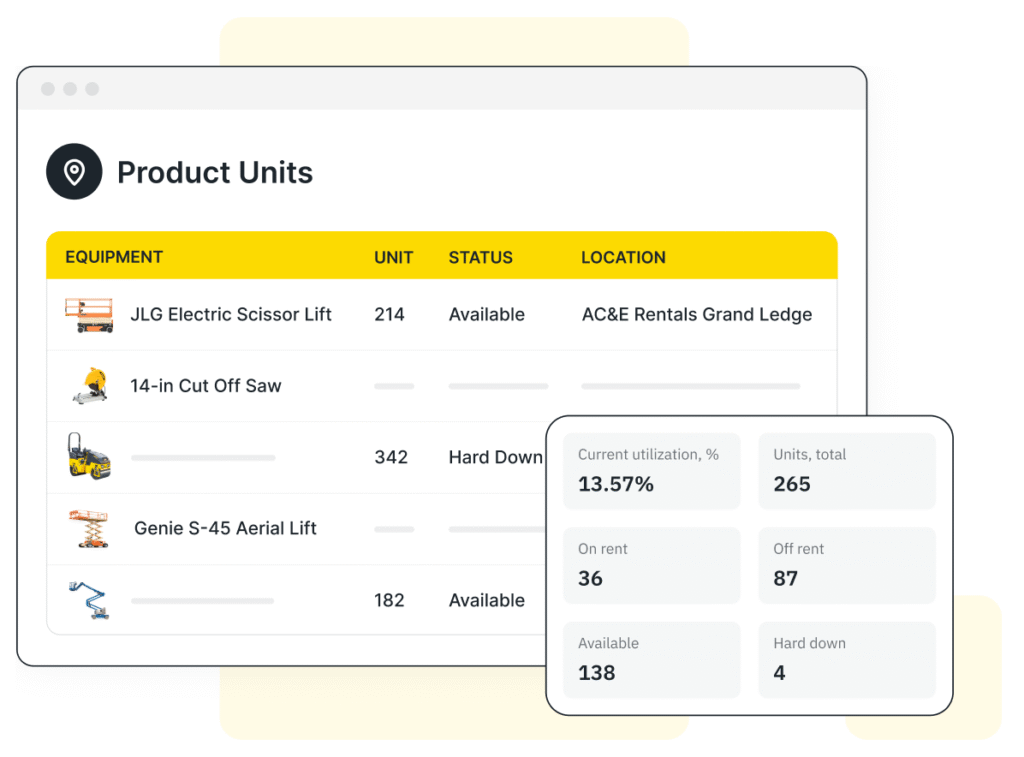
Real-time inventory and maintenance
See what’s available, on rent, or in the shop across every location — with integrated work orders, parts tracking, and scheduled services tied directly to each asset’s profitability data.
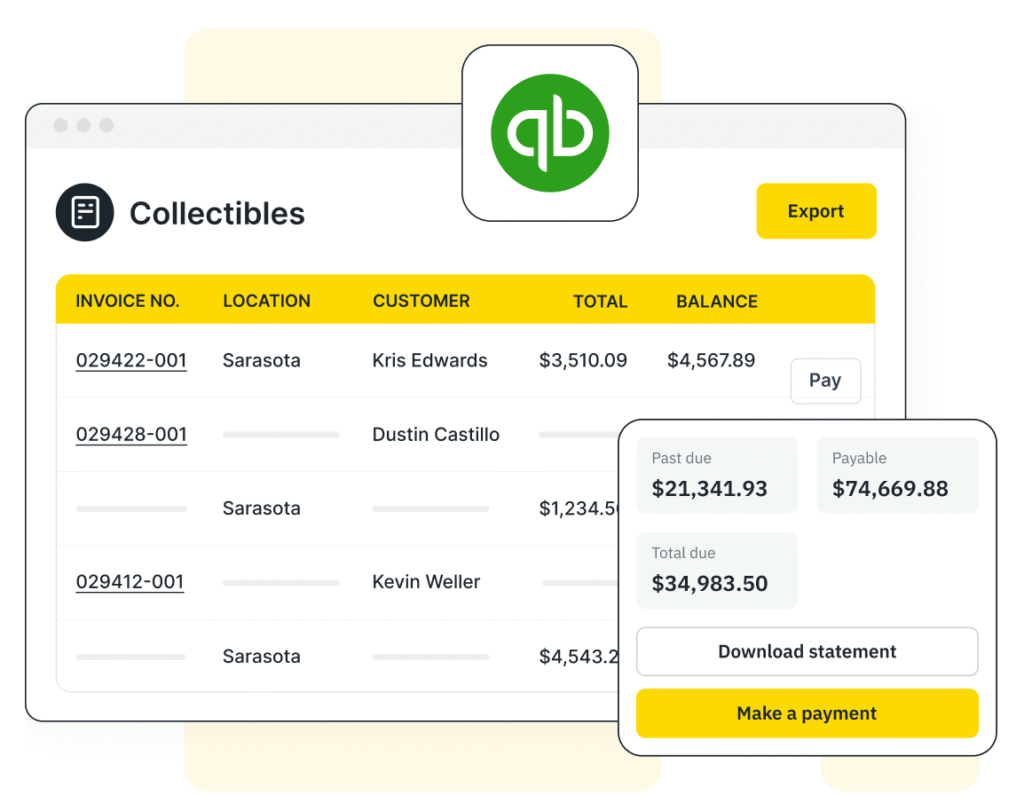
Automated invoicing and payments
Cycle billing, QuickBooks Online integration, automatic payment processing, and customer statements that go out without manual follow-up.
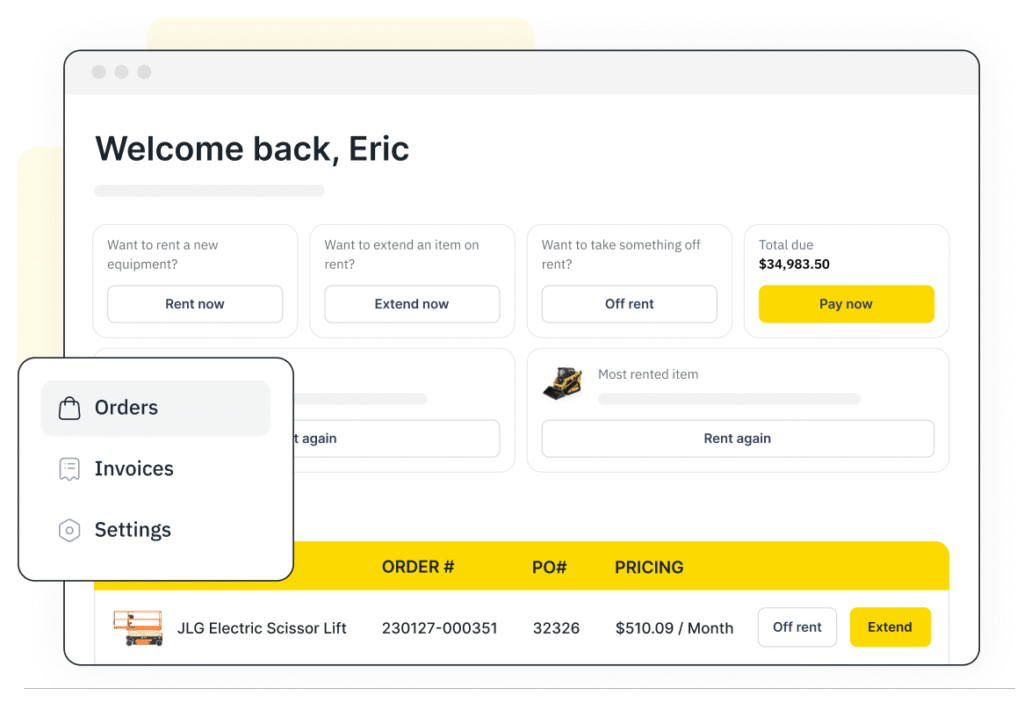
E-commerce, customer portal, and dispatch
Customers get 24/7 access to browse inventory, place reservations, and pay invoices online. Your team gets drag-and-drop dispatch scheduling, driver assignment, and real-time fleet visibility.
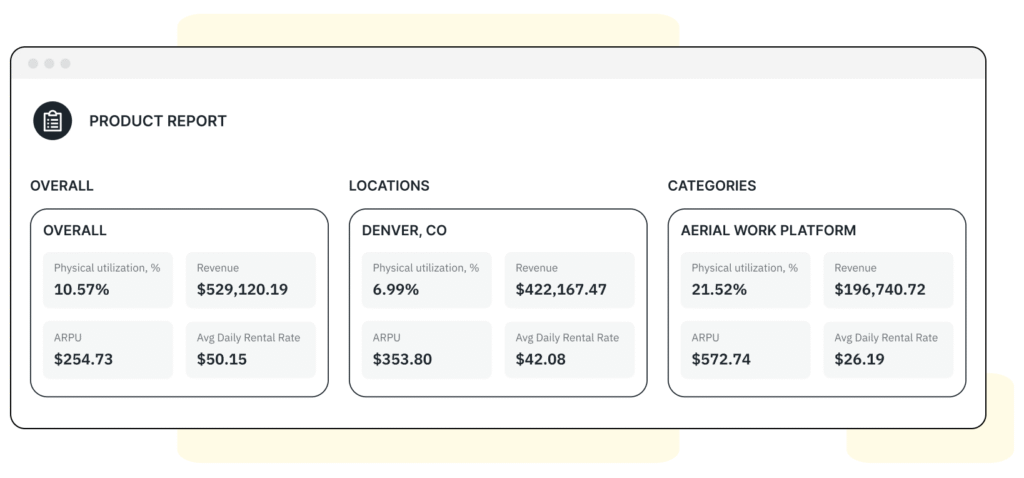
Utilization and financial reporting
Track revenue, utilization rates, and maintenance costs by product, location, or category to make smarter fleet decisions.
Because Quipli is cloud-based, there’s no hardware to install, no IT team required, and no multi-month implementation timeline. Most operators are fully onboarded within days.
If I’m on an Old ERP Platform, Should I Switch?
This is one of the most common questions rental operators face. Migrating from a legacy system feels risky — you’ve invested time, money, and training into your current platform. But here’s the question worth asking: is your current system helping you grow, or is it just something you’ve learned to work around?
Signs it might be time to switch:
- Your software was built on infrastructure from the early 2000s (or earlier), and updates are infrequent or nonexistent.
- Your team spends more time entering data into the system than actually using the data to make decisions.
- You’re paying for modules you don’t use while lacking features you actually need, like online booking or mobile access.
- Customer-facing capabilities are limited or require third-party workarounds.
- Adding a new location or growing your fleet creates a tangle of manual processes.
The reality is that modern cloud-based rental platforms have made switching significantly easier than it used to be. Onboarding and training are streamlined processes, and many operators find they’re up and running far faster than they expected.
Who Are Equipment Rental ERPs Best Suited For?
Equipment rental ERP platforms aren’t just for large, national chains. In fact, the fastest-growing segment in the rental ERP space is independent and regional operators looking to level the playing field. Here’s who benefits the most.
Independent General and Construction Equipment Rentals
Independent operators face a unique challenge: competing against national chains with deep pockets and sophisticated technology, while often relying on disconnected tools and manual processes.
A rental-specific platform helps close that gap. With integrated inventory management, automated billing, digital customer experiences, and real-time reporting, a single-location operator can deliver the same level of service and efficiency customers expect from larger competitors — without the overhead of a massive IT department.
Whether you’re renting skid steers and excavators or general tools and light equipment, the core challenges are the same, and a purpose-built platform handles all of them.
Multi-Location Equipment Rental Companies
Once you’re operating across 2 or more locations, the complexity multiplies. Inventory needs to be visible across branches. Customers may rent from one location and return to another. Financial reporting needs to roll up at both the location and company level. And dispatch needs to coordinate deliveries across a wider area.
A unified, cloud-based platform gives every team member visibility into the same real-time data, regardless of location. Instead of waiting for end-of-month numbers from each branch, you can see utilization rates, revenue performance, and fleet health across your entire operation at any time. That visibility turns reactive management into proactive, data-driven decision-making.
Final Thoughts
A rental-specific platform flips that equation. It’s built for the workflows you already run, connects every part of your business in real time, and gives your customers the digital experience they expect. Whether you’re running a single yard or multiple locations, the right platform should simplify your business — not add to the complexity.
Start by identifying the pain points in your current setup. Where are you losing time? Where are you losing visibility? Where are your customers hitting friction? Those answers will point you toward the right solution.
Ready to see what a rental-specific platform looks like in action? Schedule a demo with Quipli to see how independent rental operators are breaking free from operational gridlock and building stronger, more profitable businesses.